

What a filling is, and why your dentist recommends one
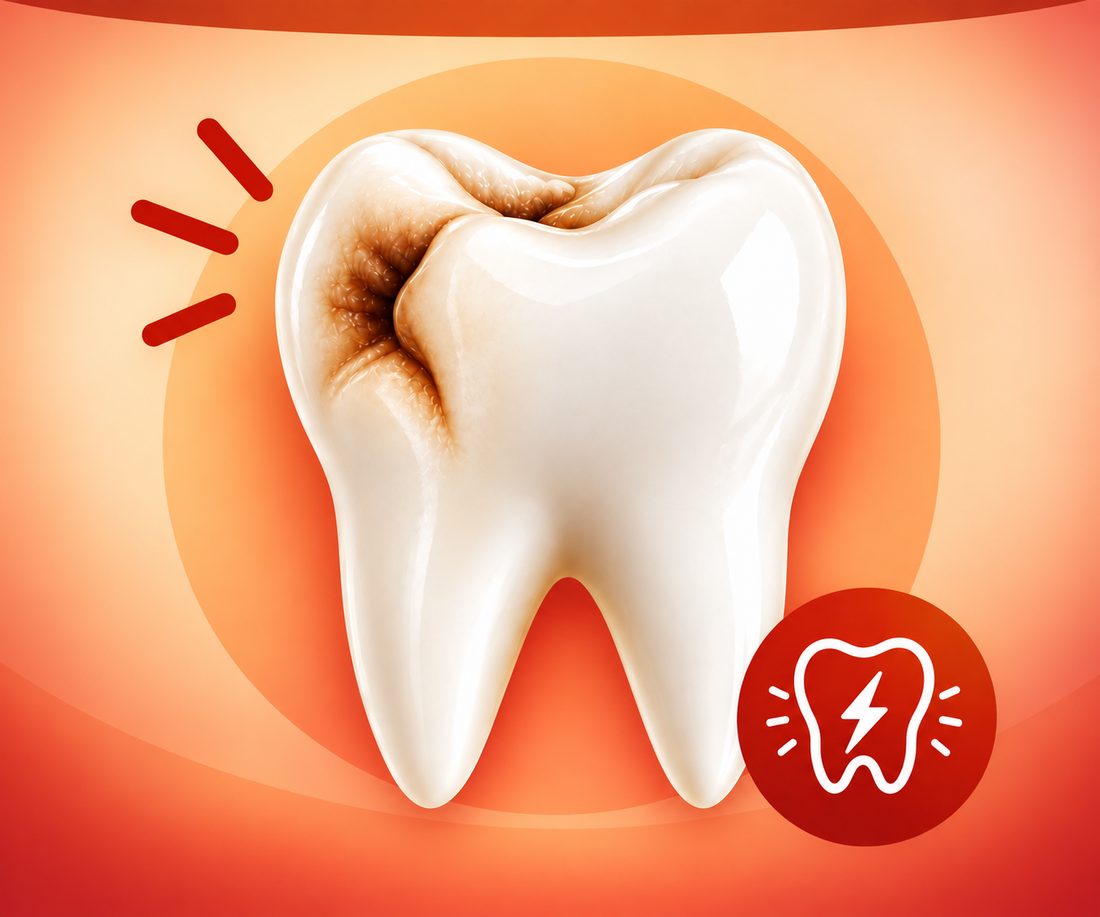
A cavity is a small hole in the hard outer layer of a tooth. It forms when the bacteria in plaque digest the sugars from the food and drink you have and produce an acid that attacks the surface of the tooth. A filling is the material your dentist uses to fill that hole once the decay has been cleaned out.
Fillings are also used to repair teeth that are chipped, cracked or worn.
A cavity does not heal on its own. Left alone it keeps growing, and the bacteria can reach the soft tissue inside the tooth. That leads to pain, infection and more involved treatment such as root canal therapy, or to losing the tooth. If a cavity is very small, your dentist may decide to keep an eye on it rather than fill it right away.
What happens at the appointment

Your dentist freezes the area with a local anaesthetic, removes the decay, and places the filling material. Tooth-coloured material is applied in layers and hardened with a special light, then shaped and polished so that your bite feels natural.
There is almost no risk involved in having a cavity filled. Tell your dental team about your medical history beforehand, since a small number of people with certain heart conditions need an antibiotic before treatment.
The filling materials used in Canada
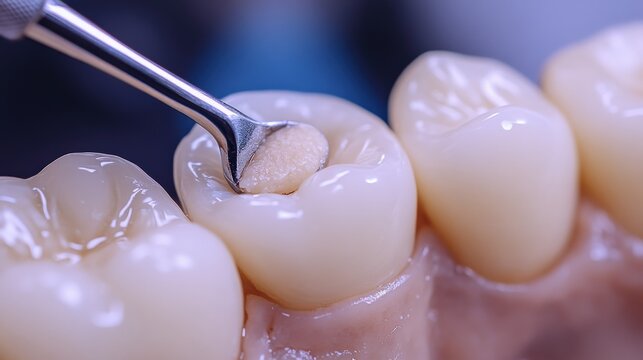
- Dental amalgam (silver) has long been one of the most widely used filling materials in Canada. It is hard-wearing and straightforward for a dentist to place.
- Composite resin is the same colour as your natural teeth. It is placed in thin layers, and each layer is hardened with a special light.
- Glass ionomer is also tooth-coloured, and is used for small cavities and cavities between teeth. Some types release small amounts of fluoride. It is only used in teeth that do not take a hard bite.
- Gold and other metals are also used. They take longer to place and cost more.
On safety, Health Canada’s position is that the current evidence does not indicate that dental amalgam is causing illness in the general population, and its safety review published in 2021 found no clear link between the mercury in amalgam and negative health effects. As a precaution, Health Canada advises using non-mercury materials in children’s baby teeth where the material is suitable, avoiding placing or removing amalgam during pregnancy, and not placing amalgam in people whose kidney function is impaired or who are allergic to mercury.
The Canadian Dental Association considers amalgam an effective and safe filling material, and advises that replacing fillings that are still doing their job, without a clinical reason for it, is unnecessary and ill-advised.
Your dentist will go through the options with you. The choice of material is one you make together, and you can decline any material you are not comfortable with.
The hours and days after
- Your lip, cheek and gums can stay frozen for a few hours. Until the feeling comes back, take care not to bite your lip, cheek or tongue. With a child, offer drinks or soft food that needs no chewing.
- The tooth may be sensitive to heat and cold for days to weeks. This usually settles on its own.
- Tell your dentist if the sensitivity does not settle, if it gets worse, or if your bite feels high when you close your teeth together.
Making it last
- Brush twice a day with a fluoride toothpaste, and clean between your teeth daily.
- Limit sugary food and drinks, and avoid snacking at bedtime.
- Keep your regular check-ups. Your dentist checks your fillings at each exam and will tell you if one has become loose or broken.
If you are covered by the Canadian Dental Care Plan, a restoration is covered once per tooth surface in any 24-month period.
Why a tooth is removed
A tooth is removed when decay or an abscess is so severe that no other treatment will cure the infection, or when gum disease has damaged the tooth so badly that there is no other way to stop the infection spreading.
Wisdom teeth are a different situation. The jaw often has no room for them, so they come in at an angle or stay trapped under the gum or bone. A partly erupted wisdom tooth leaves a flap of gum where food and germs collect, and an impacted one can lead to infection, damage to the neighbouring teeth and bone, or a cyst.
What happens at the appointment

Your dentist freezes the area, then gently loosens the tooth and lifts it out of its socket with a dental forceps. You will feel pressure and a tug, but you should not feel pain. Sometimes a tooth breaks during removal and the remaining pieces are taken out. The socket is rinsed with sterile saline, and you are given gauze to bite on.
A surgical removal, which is common with wisdom teeth, involves opening the gum over the tooth, taking away any bone covering it, and sometimes cutting the tooth into smaller pieces so that it comes out more easily. Stitches may be placed. Some dissolve on their own, others are taken out a few days later.
The first 24 hours matter most
A blood clot forms in the socket soon after the extraction, and that clot is what protects the bone while it heals. Nearly every instruction below exists to keep it in place.
- Bite down firmly and constantly on the gauze for one hour. Change the pad when it becomes soaked. If you are still bleeding after that hour, put on a fresh pad and keep up firm, constant pressure for another hour.
- Do not keep gauze in your mouth overnight.
- Do not rinse or spit for the first 24 hours, and do not blow your nose forcefully.
- No straws for the first few days. The sucking motion can pull the clot out.
- Avoid tobacco and alcohol for two weeks after surgery. Smoking is the biggest avoidable cause of dry socket.
- Rest, and keep your head propped up on pillows rather than lying flat.
- Skip strenuous activity. Physical effort can restart the bleeding.
What healing usually looks like
- Bleeding: heaviest in the first hour or two, then oozing for up to 24 hours. Some clinics say 24 to 48 hours.
- Pain: usually at its worst in the first 24 to 48 hours, with soreness for three to five days.
- Swelling: appears in the first 24 hours and can last five to seven days. Bruising can take up to ten days to fade.
- Jaw stiffness: difficulty opening wide can last seven to ten days.
- Getting back to normal: most people return to ordinary food around day three and take a day or two off. After a surgical removal, avoid strenuous activity for about two weeks.
Canadian clinics word their instructions slightly differently. Where your own clinic’s sheet differs from this page, follow your clinic.
Dry socket
Dry socket, or alveolar osteitis, happens when the blood clot breaks down or is dislodged, leaving the bone and the fine nerve endings exposed.
The sign is pain that gets worse instead of better a few days after the extraction, often between day three and day six, frequently spreading up towards the ear, and not relieved by your usual pain medication. The socket may also smell bad.
Smoking is the main preventable risk, which is why the advice is to stay off tobacco for two weeks. Keeping away from straws and forceful rinsing in the first days protects the clot as well.
Call your dentist or oral surgeon if this happens. It is treatable: the socket is cleaned, a medicated dressing is placed, and pain relief is prescribed if you need it.
What a crown is, and when one is used
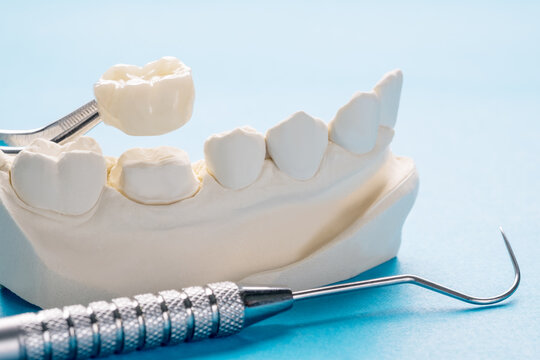
A crown, sometimes called a cap, is a hollow artificial tooth that covers and protects the natural tooth underneath. It restores the tooth’s shape, strength and appearance.
A crown may be recommended to:
- cover a tooth that has a large filling;
- protect a tooth weakened by decay from breaking;
- restore a tooth that is already broken or worn;
- cover a misshapen or discoloured tooth;
- restore a tooth after root canal treatment;
- anchor a bridge;
- cover an implant or a post.
How the crown is made and fitted
- Your dentist freezes the area and gently files down the damaged tooth to make room for the crown.
- A mould of the prepared tooth and the teeth around it is taken so that the final crown can be made to fit.
- A temporary crown is placed to protect the tooth while the final one is being made.
- At the next visit the temporary crown comes off, and your dentist checks the fit, the colour and your bite before cementing the final crown in place.
Some situations call for extra steps, such as gum treatment, orthodontic work or a root canal, and those add appointments.
Choosing the material
- Metal, including gold: extremely durable and long-lasting, but more visible, so it is typically used on back teeth.
- Porcelain: very natural in appearance and well suited to front teeth, though it can chip more easily.
- Porcelain fused to metal: combines strength with a natural look, although the metal can show near the gum line in some cases.
- Composite: natural-looking and less likely to chip than porcelain, but it wears faster and stains more easily.
Your dentist will suggest a material based on which tooth is being treated, how much chewing force it has to take, and how visible it is when you smile.
Living with your temporary crown
The temporary crown does real work. It protects the tooth and the gum, stops the neighbouring teeth from drifting into the space, lets you chew and speak normally, and helps your dentist check the shape and appearance before the final crown is made.
- Chew carefully, and avoid biting hard objects such as ice or a pen.
- Keep the area clean. Your dentist will show you how to clean around it without catching the edge.
- If the temporary crown comes off or feels loose, keep it and call the clinic. The prepared tooth should not be left uncovered until your next visit.
After the permanent crown is cemented
- Short-lived sensitivity is common, and the tooth, jaw and chewing muscles can feel tender for a while.
- Your lips and gums may stay numb for a few hours. Take care not to chew your cheek or lip.
- Your bite is checked before the crown is cemented. If it still feels high or uneven once the freezing has worn off, call the clinic so that it can be adjusted.
- Rarely, the nerve inside a crowned tooth dies and root canal treatment becomes necessary. Pain that keeps going is worth reporting.
Making it last
With good care, crowns can last ten years or longer.
- Brush and floss daily, exactly as you would a natural tooth. The edge where the crown meets the gum can still decay.
- Avoid chewing hard objects, and do not use your teeth to open or cut things.
- Crowns can loosen or wear over time, so mention any change in how it feels. A crown that has come loose can often be re-cemented rather than replaced.
How long will my mouth stay frozen?

Usually a few hours. Clinics commonly tell patients to expect two to four hours before the feeling comes back fully.
What should I be careful about while I am frozen?
- Do not bite your lip, cheek or tongue. It is easy to do without noticing while the area has no feeling.
- Stick to drinks and soft food that need no chewing until the feeling comes back.
- With a child, watch that they do not bite, scratch or pick at the cheek, lip or tongue. Offering liquids or soft food is the simplest way to prevent it.
My lip is still numb. Should I worry?
Numbness that lasts longer than expected can happen when a nerve has been bruised or irritated during treatment, and it usually clears up. Very rarely it persists. If numbness in your mouth or lip is still there three weeks after surgery, contact your clinic.
How long does it take to heal?
The first two days are the hardest, and each day after that should be better than the one before. Bleeding settles within about 24 hours, pain peaks at 24 to 48 hours and eases over three to five days, swelling clears over five to seven days, and bruising fades within about ten. Most people are back to normal food around day three.
The direction of travel is what matters. Pain or swelling that is getting worse rather than better is worth a phone call.
Why is my jaw stiff?
Difficulty opening your mouth wide, which dentists call trismus, is common after a lower extraction and usually eases over seven to ten days. If it is getting worse rather than better, call the clinic.
My filling or crown is sensitive. Is that normal?
Yes, for a while. A filled tooth can be sensitive to heat and cold for days to weeks, and a newly crowned tooth is often sensitive at first. Tell your dentist if it is not settling, if it hurts when you bite down, or if your bite feels high.
What else can happen after a wisdom tooth is removed?
- Bleeding that will not settle within about 24 hours.
- Pain or difficulty opening the jaw.
- Gums that are slow to heal.
- Dry socket.
- Rarely, numbness in the mouth or lip that does not go away.
- Rarely, a fractured jaw if the tooth was firmly attached to the jaw bone, or an opening into the sinus cavity when an upper wisdom tooth is removed.
Any surgery performed under a general anaesthetic also carries a small risk of serious complications.
Call your dentist if any of these happen
- Bleeding you cannot control four hours or more after surgery.
- Fever.
- Nausea or vomiting.
- Pain that is no better after a full day, or pain your medication is not touching.
- Swelling that is still getting worse two days or more after surgery.
- Increased redness or warmth, pus draining from the site, or red streaks leading away from it.
- A bad smell coming from the socket, which can be a sign of dry socket.
- Stitches that come loose, or the wound opening up.
- Numbness in your lip or mouth that is still there three weeks later.
Some swelling is normal for five to seven days. What matters is whether it is settling or still building.
When should I go to emergency?
Call 911 or go to the emergency department if you lose consciousness or have severe trouble breathing.
Bleeding you cannot control is a same-day problem: call your dentist once it has been four hours or more. If you have taken a blow to the face and think the jaw may be broken, go to the emergency department.
If your clinic gave you an after-hours number, use it. Many clinics take calls into the late evening and direct patients to the emergency room overnight.
What if I have a toothache or break a tooth later on?
Call your dentist, explain what happened, and ask to be seen as soon as possible. If something is caught between your teeth, do not try to get it out with anything sharp or pointed, since that can cut your gums or scratch the tooth.
A dental abscess needs treatment right away. The signs are throbbing pain, especially when you chew, red and swollen gums, a bad taste, swelling of the face or jaw, fever, or a red bump in the mouth that may ooze blood or pus.