

Model-Informed
Precision Dosing
Individualizing medication at the right dose, the right time, for the right patient.
Dosage Optimisation uses validated pharmacokinetic and pharmacodynamic models, combined with Bayesian algorithms and patient-specific data, to simulate and individualize medication regimens beyond what population averages can achieve. Currently deployed for ADHD methylphenidate and amphetamine therapy.
What the Model Optimizes
"The right molecule. The right dose. The right moment in time."
- When — Optimal medication timing based on the patient’s pharmacokinetic profile and daily schedule
- What— Which formulation (IR, ER, or combination) best fits the patient’s response pattern
- How Much — Precise dosage in mg to reach the therapeutic window while minimizing side effects
The Clinical Proble
Dosing by
Average Is Not
Precision Medicine
Most psychiatric medication dosing is based on population averages, yet patients vary dramatically in their pharmacokinetic profiles, creating systematic under- and over-treatment.
01
Population-Average Dosing Fails Individuals
Standard dosing tables are derived from average pharmacokinetic profiles. High metabolizers receive sub-therapeutic doses; slow metabolizers are over-exposed, neither is identifiable without modelling.
02
Complex Schedules Create the “Roller Coaster Effect”
Combinations of immediate- and extended-release formulations create unpredictable plasma concentration fluctuations, causing symptom gaps, rebound effects, and sleep disruption that empirical dosing cannot prevent.
03
Trial-and-Error Titration Harms Patients
Without simulation tools, clinicians spend months adjusting doses reactively, exposing patients to repeated inadequate treatment periods before reaching an optimal regimen.
04
No Tool to Simulate Regimens Before Prescribing
Clinicians have no way to model what a prescription will produce in a specific patient before writing it, decisions rely entirely on experience and general guidelines, not patient-specific predictions.
How Dosage Optimisation Works
From Patient Data to
Individualized Prescription
The Dosage Optimisation module takes patient-specific inputs and runs them through validated population PK/PD models to generate a simulated prescription, before a single dose is given.
01
Patient Profile Input
The clinician enters patient-specific parameters: weight, sex, age, target therapeutic window (ng/mL), bedtime, and sensitivity to plasma fluctuations (roller coaster effect).
02
PK Model Simulation
The Bayesian pharmacokinetic model — developed by Dr. Bonnefois (Nekka Lab) — simulates predicted plasma concentration curves for different doses, formulations, and timing schedules.
03
Optimised Prescription
The system generates a composite score for each simulated regimen — accounting for time within therapeutic window, roller coaster effect, and bedtime plasma level.
Platform Capabilities
What Dosage Optimisation Delivers
Six clinical capabilities that move ADHD medication management from population averages to individual precision.
Prescription Simulation
Simulate multiple dosing regimens, different molecules, doses, and schedules, before prescribing. See predicted plasma curves for each scenario and select the optimal regimen with confidence.
Therapeutic Window Targeting
Define patient-specific target plasma concentration ranges (ng/mL) and visualize what percentage of the day each simulated regimen keeps the patient within their therapeutic window.
Roller Coaster Effect Scoring
Quantify and minimize the abruptness of plasma concentration rises and falls, a key factor in side effects and symptom quality for pediatric and adult ADHD patients on stimulant therapy.
Multi-Formulation Comparison
Compare immediate-release, extended-release, and combination regimens side by side, accounting for timing, dose, and patient-specific PK variability to identify the formulation that fits the patient’s life.
Composite Performance Score
Each simulated regimen receives an automated composite score based on three criteria: time within therapeutic window, roller coaster effect penalty, and bedtime plasma concentration, enabling objective comparison.
Bayesian Population PK Module
Built on validated population pharmacokinetic models developed by Dr. Bonnefois (Nekka Lab, Université de Montréal), the same methodology used in academic pharmacological research, now accessible at the point of care.
Platform Capabilities
What the Clinician Sees
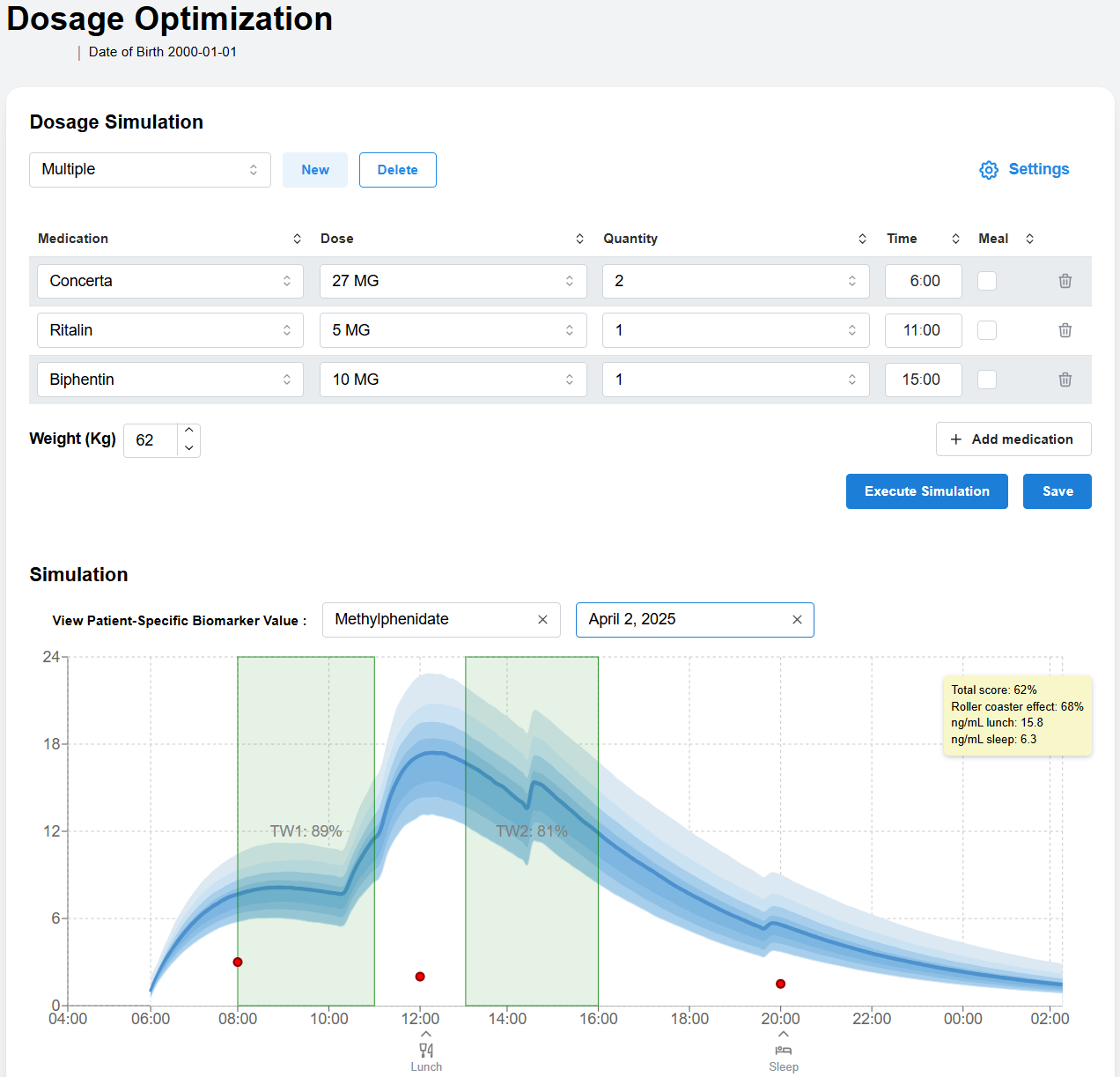
The Dosage Optimisation interface displays a pharmacokinetic curve (blue) showing estimated plasma concentration of Methylphenidate over time, with a confidence band reflecting inter-individual variability. Two separate clinician-defined therapeutic windows (TW1 and TW2, in green) reflect distinct target periods across the day, here achieving 89% and 81% time-in-window respectively.
- The blue PK curve represents predicted plasma concentration (ng/mL) across a 24-hour period for the selected multi-medication regimen
- The green therapeutic windows are set by the clinician and correspond to distinct activity periods requiring coverage (e.g. morning school and afternoon periods)
- The composite score (%) summarizes overall regimen performance, combining time-in-window, roller coaster effect (peak-to-trough fluctuation), and concentration at key time points
- Lunch and sleep concentrations are flagged as red markers to assess appetite suppression and sleep disruption risk respectively
- Clinicians adjust dose, formulation, and timing in real time — the curve updates instantly
Part of a Connected Platform
Thress Solutions, One Ecosystem
Dosage Optimisation works in concert with Dosage Monitoring and Dosage Adherence, creating a closed loop between modelled predictions and real-world clinical outcomes.
Solution - 01
Dosage Optimization
Model-informed Precision Dosing
Individualize dosing using validated pharmacokinetic and pharmacodynamic models, enabling safer titration for medications with narrow therapeutic windows.

Solution - 02
Dosage Monitoring
Remote Therapeutic Drug Monitoring and Clinical Assessment
Track treatment response continuously with patient-reported outcomes, therapeutic drug monitoring, microsampling biomarkers, and connected physiological devices.
Solution - 03
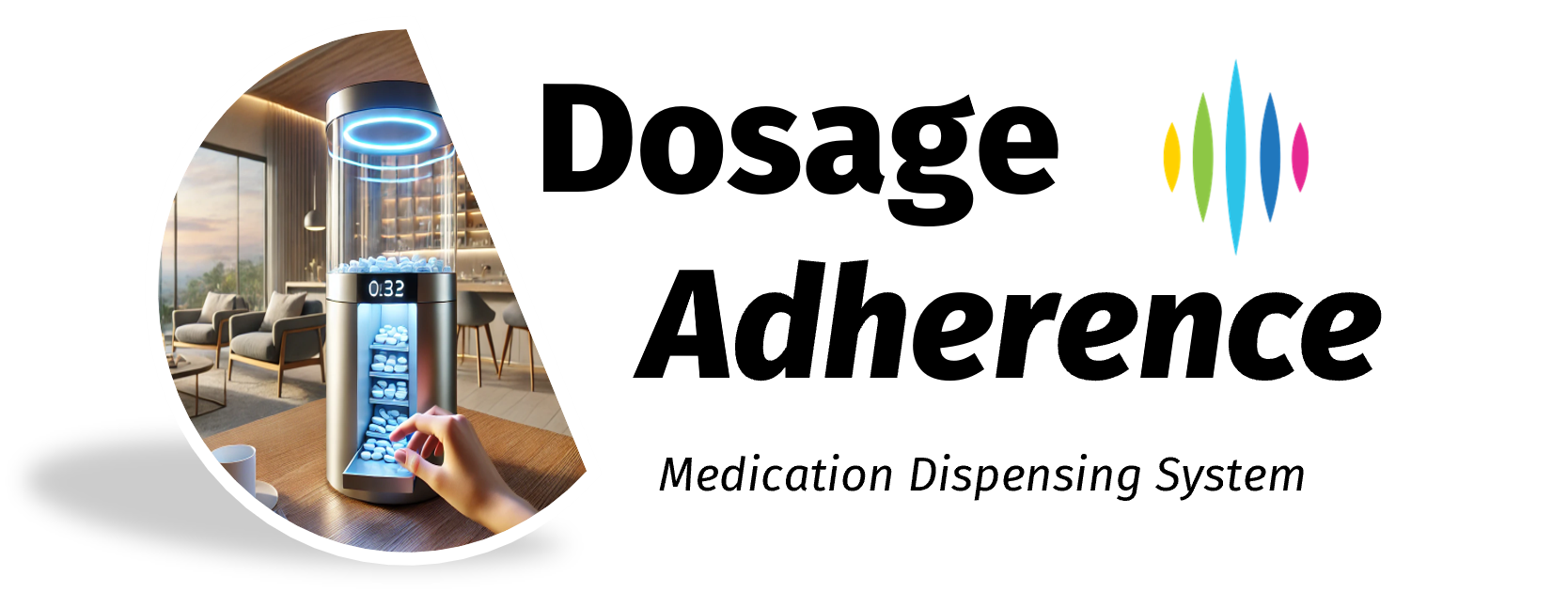
Dosage Adherence
Medication Dispensing System
Monitor adherence via connected MDS devices, enable remote dose adjustments, and intervene early before unplanned visits become necessary.
Get Started
See Dosage Optimisation
In Your Practice
Request a clinical demonstration of the PK modelling tool, tailored to your patient population and therapeutic area. See prescription simulation live, before a single dose is prescribed.
ADHD specialists · Pharmacologists · Clinical pharmacists · 24h response